-
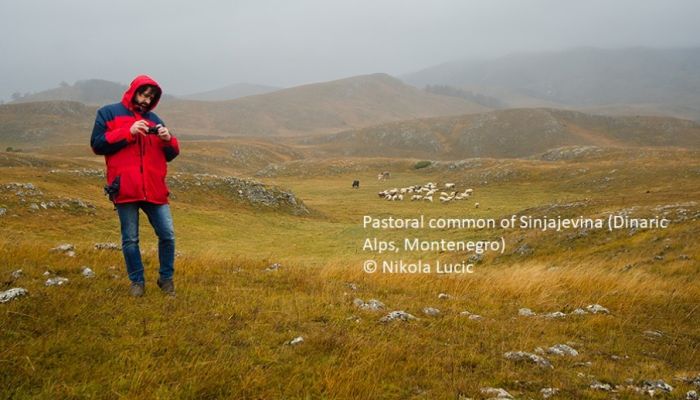
Pastoral Commons in the Montenegrin Mountains and processes of Heritization (COMPAS-MED-PAT)
There is a growing scientific awareness that pastoral commons are a positive management regime vis-à-vis society and sustainable environmental governance. Nevertheless, these are undergoing swift degradation processes. Heritagization has important assets that can contribute to solving key problems faced by Mediterranean pastoral commons. Hence the main goals of the project are: To achieve this, we…
-
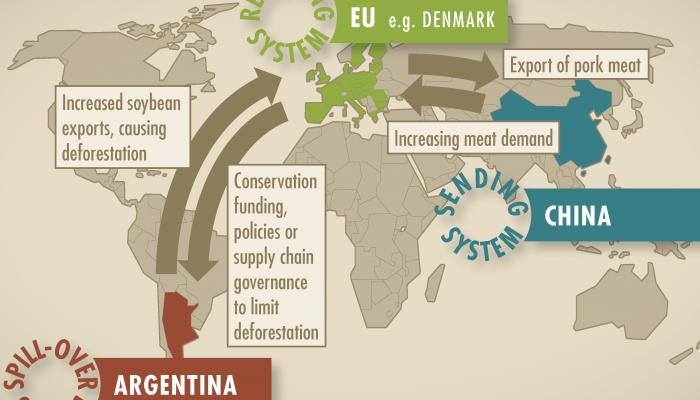
Operationalising telecouplings for solving sustainability challenges related to land-use (COUPLED)
This project focuses on telecoupling, a concept which helps to explain drivers and outcomes of land-use change by investigating the interrelationship between different actors, drivers, and feedback over long distances. Given Europe’s large and growing land-use footprint abroad, Europe has a special responsibility to develop concepts and tools needed to achieve sustainability in an interconnected…
-

NATure-based Urban innoVATION (NATURVATION)
Nature-Based Solutions (NBS) have the potential to respond to climate change, enhance biodiversity and improve environmental quality while contributing to economic regeneration and social well-being. Yet there is a substantial gap between the promise of NBS and their uptake. To unlock the potential of NBS for sustainable urban development, NATURVATION will take a transdisciplinary, internationally…
-

Nature’s integration in cities’ hydrologies, ecologies and societies (NICHES)
NICHES will contribute to an improved design and management of urban waterscapes by exploring the potential of nature-based solutions to mitigate urban runoff, flooding and sewer overflow events, thereby protecting aquatic biodiversity. Aquatic ecosystems are under increasing pressure from urbanisation, compounded by the escalating effects of climate change. With almost 60% of Europe’s water bodies…
-

Mapping and Assessment of Ecosystem Services in the Province of Barcelona within the Framework of the Territorial Information System for the Open Spaces Network (SITxell)
The main goal of this project is to map and assess ecosystem services in the Province of Barcelona and integrate them in the existing decision-support tool SITxell. This tool is used by the Barcelona Provincial Council to support municipalities in their revision of landscape and urban planning instruments and strategies. Specific objectives include:
-

Local Indicators of Climate Change Impacts Observation Network – LICCION
The potential of Indigenous and Local knowledge to contribute to climate change research is being investigated by the Local Indicators of Climate Change Impacts (LICCI) project. Nevertheless, the LICCI research project does not sufficiently contribute to integrating these knowledge and perspectives into climate change research and policy. The LICCI Observation Network (LICCION), an EU-funded proof-of-concept…
-

International cooperation to restore and connect urban environments in Latin America and Europe (INTERLACE)
The INTERLACE project aims to empower and equip European and CELAC cities to effectively restore and rehabilitate (peri)urban ecosystems towards more liveable, resilient and inclusive cities. The project applies an integrative, city-driven approach to address urban challenges through restorative nature-based solutions. A three-tiered mechanism for city and wider stakeholder exchange and learning will strengthen cooperation…
-

Integrating Valuations, Markets and Policies for Biodiversity and Ecosystem Services (INVALUABLE)
The project’s main objective was to clarify the potential of market-based instruments (MBIs) to better integrate biodiversity and ecosystem services into public policies, based on appropriate institutional arrangements. It developed: INVALUABLE results allowed researchers, decision-makers as well as practitioners to better grasp and clarify the MBI concept and its potential advantages and limits for biodiversity…
-
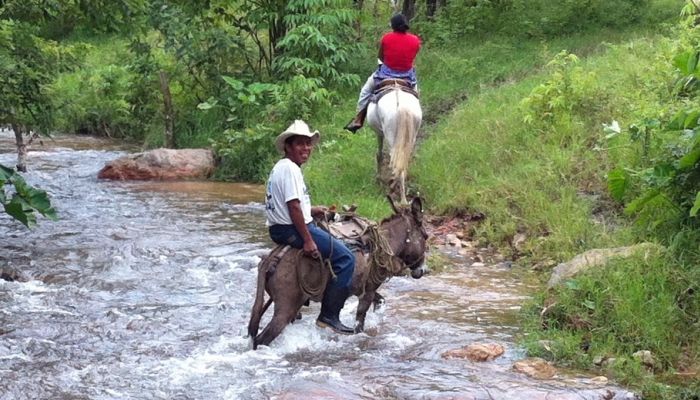
Framing Debates about Poverty Reduction and Ecosystem Services
In an important paper in Science ten years ago Adams and colleagues offered an analysis that clarified the confused debate that had arisen about the relationship between conservation policy and poverty reduction. The value of that paper was to hold up a mirror to a divided intellectual and policy-making constituency. It became a heuristic device…
-

FairNature
Practical guide to scaling Nature-based Solutions How can we promote a sustainable and just future while staying within planetary boundaries? Nature-based Solutions (NbS) are part of the answer – NbS aim to develop solutions that work with nature to support both society and the environment. Many pilot NbS exist, but few are implemented on a…