-
SimulPast
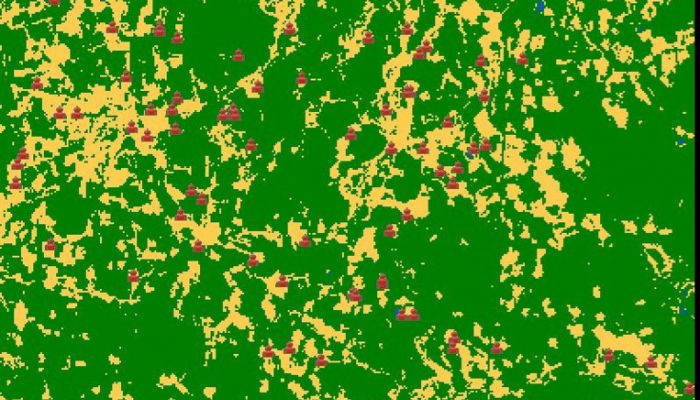
The project mission was to develop an innovative and interdisciplinary methodological framework to model and simulate ancient societies and their relationship with environmental transformations. The project aimed to define practical guidelines for simulation in the humanities and consolidate a new research line in the use of formal modelling and simulation to investigate past human societies…
-
Resilience of Indigenous Peoples’ Health care system
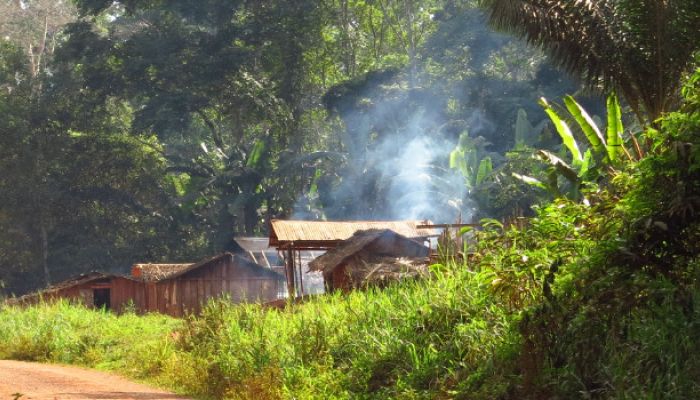
How do the global climatic, ecological and socio-economical changes affect the capacity of human health system to prevent the emergence of new diseases? What are the social, cultural and ecological factors that enhance or break down the capacity of human health care system to absorb disturbances while retaining its basic function and structure, i.e. to…
-

Payments for Ecosystem Services: long-term Effectiveness and Motivations for the conservation of forest ecosystems (PES-EMOTIVE)
Global biodiversity loss and climate change mitigation are two of the greatest environmental challenges of our time. To partially address such challenges, Payments for Ecosystem or Environmental Services (PES) programs have disbursed billions of dollars of funding to rural communities and landowners in tropical and sub-tropical countries, conditional on the voluntary conservation of standing forests…
-
Operationalising telecouplings for solving sustainability challenges related to land-use (COUPLED)
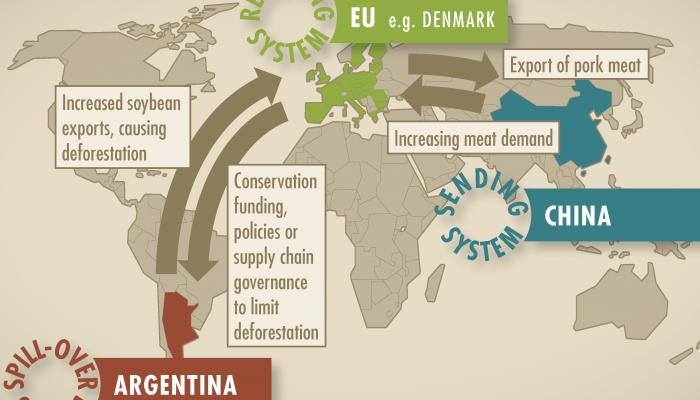
This project focuses on telecoupling, a concept which helps to explain drivers and outcomes of land-use change by investigating the interrelationship between different actors, drivers, and feedback over long distances. Given Europe’s large and growing land-use footprint abroad, Europe has a special responsibility to develop concepts and tools needed to achieve sustainability in an interconnected…
-

NATure-based Urban innoVATION (NATURVATION)
Nature-Based Solutions (NBS) have the potential to respond to climate change, enhance biodiversity and improve environmental quality while contributing to economic regeneration and social well-being. Yet there is a substantial gap between the promise of NBS and their uptake. To unlock the potential of NBS for sustainable urban development, NATURVATION will take a transdisciplinary, internationally…
-

Nature’s integration in cities’ hydrologies, ecologies and societies (NICHES)
NICHES will contribute to an improved design and management of urban waterscapes by exploring the potential of nature-based solutions to mitigate urban runoff, flooding and sewer overflow events, thereby protecting aquatic biodiversity. Aquatic ecosystems are under increasing pressure from urbanisation, compounded by the escalating effects of climate change. With almost 60% of Europe’s water bodies…
-

Local Indicators of Climate Change Impacts Observation Network – LICCION
The potential of Indigenous and Local knowledge to contribute to climate change research is being investigated by the Local Indicators of Climate Change Impacts (LICCI) project. Nevertheless, the LICCI research project does not sufficiently contribute to integrating these knowledge and perspectives into climate change research and policy. The LICCI Observation Network (LICCION), an EU-funded proof-of-concept…
-
Linking biodiversity conservation and ecosystem services (CONNECT)
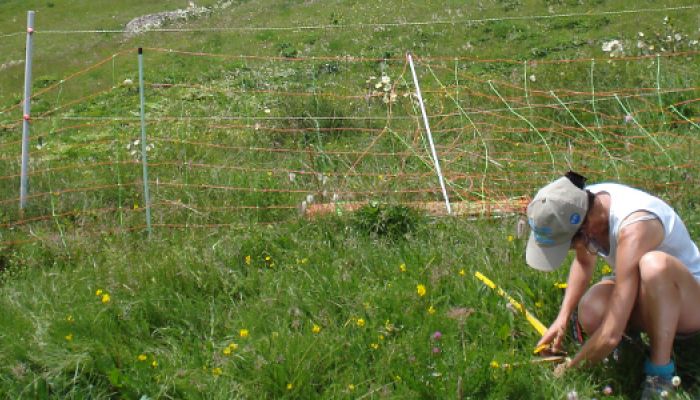
Biodiversity policy is increasingly influenced by evidence about the role of biodiversity in the provision of ecosystem services. However, the current state of scientific knowledge and empirical evidence is inconclusive and does not provide a sufficiently robust basis to make definite statements about whether securing the provision of specific ecosystem services will also guarantee biodiversity…
-

Integrating Valuations, Markets and Policies for Biodiversity and Ecosystem Services (INVALUABLE)
The project’s main objective was to clarify the potential of market-based instruments (MBIs) to better integrate biodiversity and ecosystem services into public policies, based on appropriate institutional arrangements. It developed: INVALUABLE results allowed researchers, decision-makers as well as practitioners to better grasp and clarify the MBI concept and its potential advantages and limits for biodiversity…
-
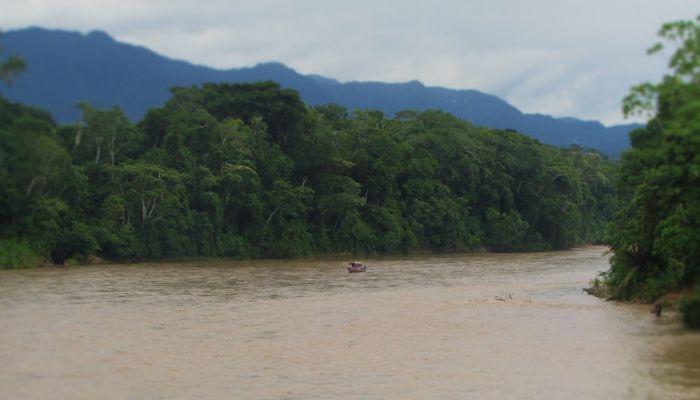
Indigenous land-based stewardship from local to global scales
This project aims to quantitatively explore the role of Indigenous Peoples in defending their territories in the face of rapidly expanding commodity and extractive frontiers. This will be done by: (1) assessing emerging threats to Indigenous land-based stewardship across scales, as well as the factors shaping success in Indigenous Peoples’ resistance movements against commodity and…

Research Line: Knowledge, Data, and Technology in Environmental Governance
Examining how scientific, Indigenous, and local environmental knowledges are produced and legitimised. We integrate ethnobotanical data, geospatial analyses, AI pipelines, and digital traces to study human–nature relations, digital stewardship, and data justice in conservation.